Ribeye Donburi Recipe
Introduction
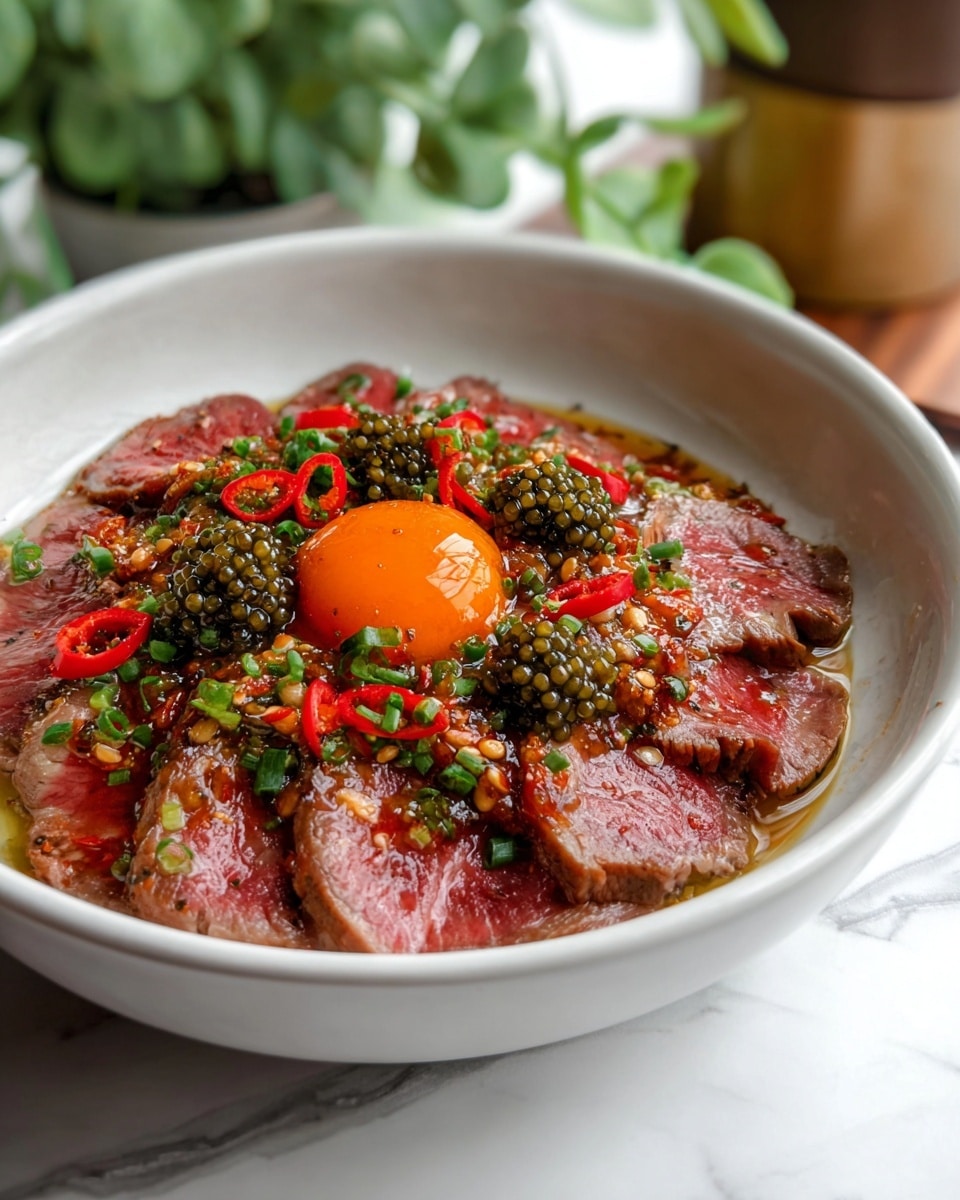
This Ribeye Donburi is a luxurious twist on a classic Japanese rice bowl, featuring tender, perfectly seared ribeye steak topped with a rich cured egg yolk and flavorful sauce. It’s a comforting yet elegant dish that’s surprisingly simple to prepare at home.
Ingredients
- 2 prime ribeyes (16 oz each)
- 2 egg yolks
- Tamari (to cure)
- 1 tsp mirin
- 1 cup sushi rice (Calrose rice)
- 1 kombu strip
- Caviar (optional)
- 2 scallions, chopped
- 1 Fresno chile, chopped
- 1 tbsp salsa macha (or chili crisp)
- 1 tsp agave nectar
- 3 tbsp tamari (or soy sauce)
- 3 tbsp mirin
- 1/2 tsp sesame oil
- Pinch bonito flakes
Instructions
- Step 1: Cover the egg yolks in tamari and mirin, then let them cure in the refrigerator for at least 1 hour and up to 4 hours.
- Step 2: Wash the sushi rice thoroughly. Add it to a rice cooker with 1 1/4 cups of water and the kombu strip, then cook according to your rice cooker’s instructions.
- Step 3: Sprinkle a bit of salt on the ribeye steaks and refrigerate for 1 hour. Afterward, pat the steaks dry carefully and remove any excess salt.
- Step 4: Brush the steaks with soy sauce evenly on both sides.
- Step 5: Preheat a pan on high heat for 2 minutes, then add a little olive oil. Sear the ribeye steaks on medium-high heat for 2.5 to 3.5 minutes per side. Remove from the heat and let rest for 10 minutes before slicing.
- Step 6: In a bowl, mix together the chopped scallions, Fresno chile, salsa macha, agave nectar, tamari, mirin, sesame oil, and a pinch of bonito flakes to create the sauce.
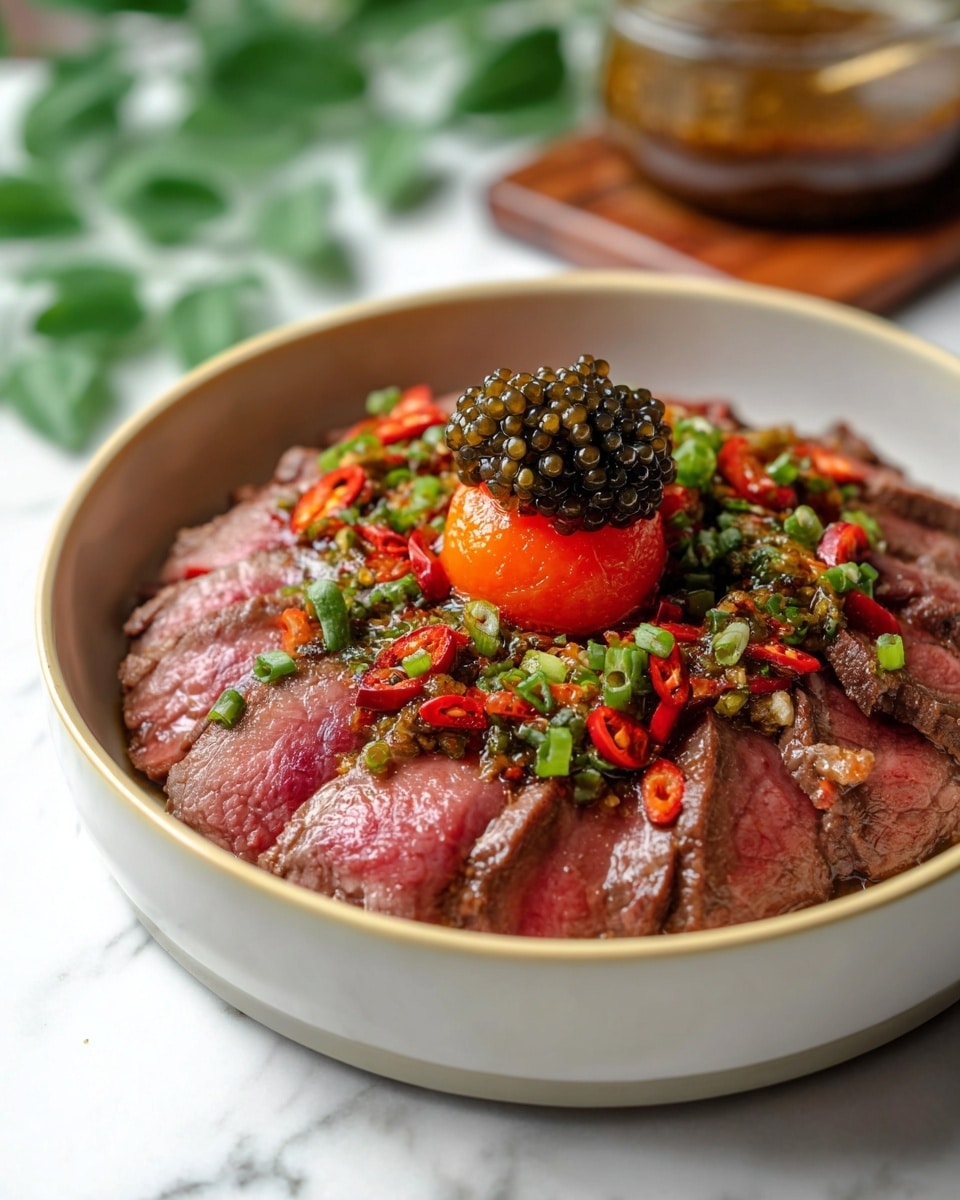
- Step 7: Divide the cooked rice between two plates, arrange sliced ribeye on top, spoon over the sauce, then place the cured egg yolks and optional caviar on each serving.
Tips & Variations
- For extra umami depth, try adding a few drops of toasted sesame oil to the sauce mixture.
- Substitute ribeye with another well-marbled steak if preferred, like New York strip or sirloin.
- Adjust the heat by adding more Fresno chile or using spicy chili crisp in the sauce.
- If you don’t have tamari, regular soy sauce can be used but may be saltier.
- To make this dish vegetarian, omit the steak and add grilled mushrooms or tofu with a similar sauce.
Storage
Store any leftover cooked ribeye and rice separately in airtight containers in the refrigerator for up to 2 days. Reheat gently in a pan or microwave until warm. It’s best to add the cured egg yolk fresh each time to maintain texture and flavor.
How to Serve
Serve this delicious recipe with your favorite sides.
FAQs
Can I use regular soy sauce instead of tamari?
Yes, regular soy sauce is a fine substitute if tamari is not available, though it may be slightly saltier and less rich in flavor.
How do I know when the ribeye is perfectly seared?
The ribeye is done when it develops a rich brown crust on the outside after 2.5 to 3.5 minutes per side over medium-high heat. It should be rested afterward to allow juices to redistribute before slicing.
PrintRibeye Donburi Recipe
Ribeye Donburi is a luxurious Japanese-inspired rice bowl featuring perfectly seared prime ribeye steak served over seasoned sushi rice. Enhanced with a rich yolk cured in tamari and mirin, topped with a flavorful salsa macha sauce, scallions, and optional caviar, this dish combines savory, umami flavors with a hint of spice for a delightful gourmet meal.
- Prep Time: 1 hour 20 minutes
- Cook Time: 15 minutes
- Total Time: 1 hour 35 minutes
- Yield: 2 servings 1x
- Category: Main Course
- Method: Stovetop
- Cuisine: Japanese
Ingredients
Ribeye and Curing Ingredients
- 2 Prime ribeyes (16 oz each)
- 2 Egg yolks
- Tamari (enough to cover yolks for curing)
- 1 tsp Mirin (for curing yolks)
- Salt (for ribeye curing)
- Olive oil (for searing)
- 3 tbsp Tamari or soy sauce (for brushing steak and sauce)
- 3 tbsp Mirin (for sauce)
- 1 tsp Agave nectar
- 1 tbsp Salsa macha or chili crisp
- 1/2 tsp Sesame oil
- Pinch Bonito flakes
Rice
- 1 cup sushi rice (Calrose rice)
- 1 1/4 cup water (for rice cooker)
- 1 Kombu strip
Toppings and Garnishes
- 2 scallions, chopped
- 1 Fresno chile, chopped
- Caviar (optional)
Instructions
- Cure the Egg Yolks: Submerge the egg yolks in a mixture of tamari and 1 tsp mirin. Refrigerate for a minimum of 1 hour and up to 4 hours to develop rich, savory flavors.
- Prepare Sushi Rice: Rinse the rice thoroughly under cold water until the water runs clear. Place rice, 1 1/4 cup water, and kombu strip into a rice cooker and cook until done.
- Salt Cure the Ribeye: Sprinkle salt over the ribeye steaks and refrigerate for 1 hour. After curing, pat the steaks dry thoroughly and remove excess salt.
- Brush Steak with Soy Sauce: Lightly brush tamari or soy sauce over the surface of each ribeye for extra umami before searing.
- Sear the Ribeye: Preheat a pan on high heat for 2 minutes, add olive oil. Sear the steaks on medium-high heat for 2.5 to 3.5 minutes per side to desired doneness. Rest the steak for 10 minutes, then slice thinly.
- Prepare the Sauce: In a bowl, combine 3 tbsp tamari or soy sauce, 3 tbsp mirin, 1 tbsp salsa macha or chili crisp, 1 tsp agave nectar, 1/2 tsp sesame oil, and a pinch of bonito flakes. Stir well to meld flavors.
- Assemble Donburi Bowls: Divide the cooked sushi rice between two plates. Arrange the sliced ribeye on top. Spoon the prepared sauce generously over the steak and rice. Garnish with the cured egg yolk, chopped scallions, Fresno chile, and optional caviar for an elegant finish.
Notes
- Curing the egg yolks in tamari adds a rich umami depth that complements the steak perfectly.
- Using kombu in the rice cooker enhances the rice’s natural flavor with subtle sea notes.
- Be sure to pat the salted ribeye dry before searing to achieve a nice crust.
- Allowing the steak to rest after searing ensures juiciness and even cooking.
- Salsa macha can be substituted with chili crisp or another spicy chili oil for similar flavor.
- This dish pairs nicely with a light, crisp sake or chilled white wine.
Keywords: Ribeye Donburi, Japanese rice bowl, seared steak donburi, sushi rice bowl, tamari cured egg yolk, salsa macha sauce, umami rice bowl, Japanese main dish