Sourdough Pasta Recipe
Introduction
Sourdough pasta is a delightful twist on traditional fresh pasta, infusing it with subtle tang and extra flavor thanks to sourdough discard. This recipe uses a combination of flours and simple ingredients to create a tender, elastic dough perfect for homemade noodles.
Ingredients
- 100g King Arthur ‘00’ Pizza Flour
- 250g King Arthur Semolina Flour
- 50g sourdough starter, unfed/discard
- 2 large eggs
- 12g olive oil
- 10g table salt
- 30g to 45g water, divided
Instructions
- Step 1: Weigh or measure each flour. In a large bowl, whisk together the flours, then mound them on a clean work surface. Make a well in the center deep enough to see the surface below.
- Step 2: Add sourdough discard and eggs into the well. Use a fork to whisk them together, gradually incorporating flour from the edges until dough begins to form clumps.
- Step 3: Add olive oil and salt. Mix and knead the dough by hand, adding water 10g at a time until the dough holds together with little dry flour left. Knead for 5 to 10 minutes until smooth and elastic. (A food processor can also be used – see tips.)
- Step 4: Wrap the dough tightly in plastic wrap or place in an airtight container. Let it rest at room temperature for 1 hour or refrigerate for up to 1 day.
- Step 5: Divide dough into three equal pieces (~185g each). Lightly flour one piece while keeping others covered.
- Step 6: To shape by hand, roll the dough thinly (1/8″ or less). Cut into large sheets, dust lightly with semolina, then roll loosely. Slice into strips about 3/4″ for pappardelle, 1/2″ for fettuccine, or just over 1/8″ for linguine.
- Step 7: To use a pasta machine, roll dough once on the largest setting, fold into thirds to form a rectangle, then roll again on the largest setting. Adjust down through settings to about #7 (0.8mm thick). Dust with flour, cut sheets to length, and run through cutting blades.
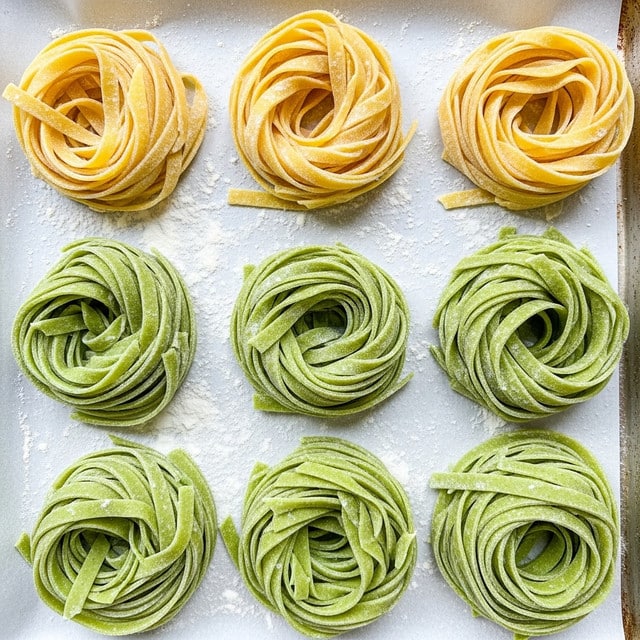
- Step 8: Form pasta strands into loose nests and set aside until ready to cook. Repeat with remaining dough.
- Step 9: Bring a large pot of heavily salted water to a boil. Cook pasta for 2 to 4 minutes until al dente. Drain immediately, reserving some cooking water for sauce if desired.
- Step 10: To store fresh pasta, cover and refrigerate for up to 2 days (cook longer if refrigerated, about 7 to 9 minutes) or freeze well-wrapped for longer storage.
Tips & Variations
- To use a food processor, pulse the flours with the eggs, sourdough discard, oil, salt, and water until a shaggy dough forms. Then knead lightly by hand until smooth.
- Experiment with different pasta shapes or thicknesses based on your preference.
- Use leftover sourdough discard to add complex flavor and reduce waste.
Storage
Store fresh pasta covered in the refrigerator for up to 2 days. Refrigerated pasta will need a longer cooking time of about 7 to 9 minutes. For longer storage, freeze uncooked pasta tightly wrapped and use within a month. Cook frozen pasta directly from the freezer, adding a minute or two to the cooking time.
How to Serve

Serve this delicious recipe with your favorite sides.
FAQs
Can I use fed sourdough starter instead of discard?
Yes, you can use fed starter, but discard is preferred to avoid affecting your starter’s feeding schedule. Flavor may be slightly different with fed starter.
What if my dough feels too dry or too sticky?
Add small amounts of water if too dry, or a light dusting of flour if sticky. The dough should be firm but elastic and not tacky.
PrintSourdough Pasta Recipe
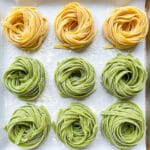
This Sourdough Pasta recipe combines the tangy flavor of sourdough discard with a blend of ’00’ pizza flour and semolina flour to create a tender yet firm pasta dough. Perfectly balanced for a delicious, homemade pasta that can be shaped by hand or using a pasta machine and cooked al dente for a satisfying texture.
- Prep Time: 20 minutes
- Cook Time: 4 minutes
- Total Time: 1 hour 25 minutes
- Yield: 3 servings 1x
- Category: Main Course
- Method: Stovetop
- Cuisine: Italian
Ingredients
Flours
- 100g King Arthur ‘00’ Pizza Flour
- 250g King Arthur Semolina Flour
Wet Ingredients
- 50g sourdough starter, unfed/discard
- 2 large eggs
- 12g olive oil
- 30g to 45g water, divided
Seasoning
- 10g table salt
Instructions
- Measure the flours: Weigh each flour accurately, or measure by spooning into a cup and sweeping off any excess, ensuring precision for the best dough texture.
- Prepare the flour mound: In a large bowl, whisk the ‘00’ pizza flour and semolina flour together, then mound the mixture on a clean surface. Create a deep well in the center to prepare for adding wet ingredients.
- Add eggs and sourdough discard: Pour the sourdough starter and eggs into the well. Whisk them together with a fork, gradually incorporating the surrounding flour to begin forming the dough.
- Incorporate oil, salt, and water: Add olive oil and salt to the dough. Knead by hand, adding water incrementally (10g at a time) until the dough holds together with minimal dry flour. The dough will be stiff and slightly prone to tearing.
- Knead the dough: Continue kneading for 5 to 10 minutes until the dough becomes smooth and elastic. This develops gluten for perfect pasta texture.
- Rest the dough: Wrap the dough in plastic or place it in an airtight container and let it rest for 1 hour at room temperature or refrigerate for up to 1 day to relax the gluten.
- Divide and flour the dough: Divide into three equal pieces (~185g each). Lightly coat one piece with flour while keeping the others covered to prevent drying.
- Roll out the dough: By hand, roll each piece thinly to about 1/8″ thickness using a heavy rolling pin. Alternatively, use a pasta machine starting on the largest setting, folding the dough into thirds, gradually reducing thickness until setting #7 (0.8 mm) is reached.
- Cut the pasta: For hand-rolled dough, cut large sheets, dust with semolina flour, roll loosely, and slice into strips: 3/4″ for pappardelle, 1/2″ for fettuccine, or just over 1/8″ for linguine. Machine-rolled sheets can be cut with the pasta machine blades.
- Form nests: Curl the cut pasta strands into loose mounds called nests and set aside until ready to cook.
- Cook the pasta: Boil a large pot of heavily salted water. Cook fresh pasta for 2 to 4 minutes until al dente. Drain promptly, reserving some cooking water for sauce as desired.
- Store if needed: Refrigerate fresh, cut pasta covered for up to 2 days (may require 7-9 minutes cooking). Freeze well-wrapped for longer storage.
Notes
- The dough will be stiff and may tear easily—this is normal due to the use of semolina flour and sourdough starter.
- Resting the dough allows gluten to relax, making it easier to roll out and shape.
- If using a pasta machine, folding the dough before rerolling helps shape it into a perfect rectangle.
- Fresh pasta cooks very quickly; watch closely to avoid overcooking.
- Sourdough discard provides flavor and slight acidity, substituting for some or all of the usual flour hydration.
- Semolina dusting on pasta sheets prevents sticking and improves texture.
Keywords: sourdough pasta, homemade pasta, sourdough discard recipe, semolina pasta, fresh pasta dough